
Talking about surfactants, Lauryl Hydroxyethyl Imidazoline stands out among specialty chemicals, yet many people outside the lab haven’t heard of it. In the early half of the 20th century, chemists tried to stretch natural resources further as petroleum-based products pushed into every corner of industry. Fatty acids from coconut and palm oil took starring roles. By the 1950s, imidazoline compounds appeared on the scene, largely in response to the growing demands of detergents and industrial cleaners that needed to work in harder water, more complicated industrial settings, and harsher climates than ever before. The imidazoline backbone let chemists dial in corrosion resistance, antistatic properties, and improved mildness. Lauryl Hydroxyethyl Imidazoline, crafted by bringing together lauric acid and hydroxyethyl ethylenediamine under gentle heat, fit the bill for shampoos, metalworking fluids, and dozens of other applications. This chemical evolution follows one thread running through all specialty surfactant development: meeting practical human need, whether that’s getting laundry clean, protecting car engines, or keeping skin soft.
Saying Lauryl Hydroxyethyl Imidazoline is just a surfactant sells it short. On my own workbench, it’s offered as a viscous amber liquid, faintly amine-scented, always demanding respect for its concentrated power. The imidazoline ring and its lauryl tail let it act as both a cleansing agent and a corrosion inhibitor. Chemists choose it for personal care formulas thanks to its mildness and foaming character that feels luxurious on skin. Manufacturers count on it to keep metal parts safe from rust, not just washed but also protected. The formula delivers a rich lather and leaves less residue than many simple amine oxides or sulfates, helping engineers solve countless headaches in daily production. Product sheets from supply houses list names like Hydroxyethyl Lauryl Imidazoline, Imidazoline C-12, and often cunning brand labels that highlight its dual action in personal care and industrial settings.
Think of Lauryl Hydroxyethyl Imidazoline as a syrup-thick liquid, light amber to golden, with the faint, signature note of imidazoline chemistry—slightly earthy, slightly basic. It dissolves easily in water if not poured too quickly, and forms stable emulsions that stay together under reasonable heat and pressure. The amide and imidazoline backbone give this surfactant resistance to breakdown from heat and acid, a real bonus in many industrial wash processes. Its pH usually falls between 9 and 10, so gloves come in handy during handling. Its surface activity outpaces simple fatty acid soaps, which is why shampoo makers and metalworkers both trust it to break up oils. The molecular structure, with both hydrophobic lauryl and hydrophilic hydroxyethyl groups, lets this surfactant play well with oily messes and hard water deposits.
Labels for Lauryl Hydroxyethyl Imidazoline tend to look anything but user-friendly to a non-chemist: you’ll see listings for active content by weight—typically in the 80–90% range for industrial materials. Manufacturers set strict tolerances for pH, water content, color, and viscosity. You rarely see dye or scent additions in raw bulk containers bound for industrial blending plants. MSDS documentation spells out the hazards: eye and skin irritation with direct contact, so eye protection and ventilation belong in any work area. Labels must show chemical identity, batch code, net weight, and appropriate GHS hazard symbols by law. In the US and the EU, importers must include regulatory status and detailed compliance statements, especially for skin-contact uses.
In my years working with surfactants, I’ve watched Lauryl Hydroxyethyl Imidazoline come together in reactors that look more like soup kettles than high-tech vessels. Producers combine lauric acid—most often derived from palm kernel or coconut oil—with hydroxyethyl ethylenediamine, under mild heat and constant stirring. This reaction takes a few hours and avoids strong acids or solvents, making it friendlier for both operators and the environment than many surfactant syntheses. The by-products, mostly water, get separated in the final purification. Operators draw samples throughout the run for pH and viscosity checks. At the end, the syrupy product moves into drums or totes while still warm.
Lauryl Hydroxyethyl Imidazoline's imidazoline ring and tertiary amine can take part in a variety of chemical tweaks. Manufacturers might quaternize the amine, making the molecule more cationic—a game-changer in hair conditioners and antistatic textile agents. Chemists sometimes open the imidazoline ring to yield linear amides, building blocks for other functional surfactants or emulsifiers. High pH or strong oxidizers can degrade the compound, so most industrial users avoid combining it with bleach or strong alkali in mixed formulations. Some research groups tweak the fatty acid length or the side chain connected to the ethylenediamine to get better rinsing or improved compatibility with hard water ions. All these modifications aim to balance cleaning, mildness, and compatibility with other active ingredients.
If you’re searching safety data or product catalogs, you’ll trip across names like 1-(2-Hydroxyethyl)-2-n-dodecyl-2-imidazoline, hydroxyethyl lauryl imidazoline, and Imidazoline C-12. Big suppliers and cosmetic ingredient houses often list proprietary blends with branded names—Laureth Imidazoline, Laurimid, Imizoil, and a dozen others—each with a small tweak to the basic backbone or purity spec. In the lab, everyone just calls it “HEI” or “Lauryl Imidazoline”—staying precise only for paperwork.
No matter how useful a chemical seems, carelessness ruins the story—and Lauryl Hydroxyethyl Imidazoline demands some care. It irritates eyes and unprotected skin, especially in raw form. In factories, the best run lines always carry fresh gloves, aprons, and face shields. Spill kits sit ready. Wastewater from manufacturing runs into holding tanks for neutralization, limiting the risk of raw material escape. Standard ventilation and local exhaust keep amine vapors down. Industry standards set limits for worker exposure, and users can’t ignore these rules while mixing up barrels of concentrated surfactant. Cosmetic ingredient panels in Europe and the US flag this chemical as safe for rinse-off use at typical concentrations, but caution still rules for anyone working with the concentrated raw material.
Few chemicals cover as many bases as Lauryl Hydroxyethyl Imidazoline. In my own tests, the foaming can be dialed up for shampoos, cleansers, and bubble baths, giving a thick, mild wash for hair and skin without the squeaky-dry feeling. Textile plants blend it into antistatic fiber treatments and softeners, which cut down static cling and help fabrics stay smooth. Industrial users value its ability to prevent corrosion in engine cooling systems and oil pipelines—the lather that cleans also leaves a microscopic film on metal surfaces. The compound crops up in dish soaps, industrial degreasers, car shampoos, and even fire-fighting foams. It’s also a go-to antistatic agent in plastics, where its structure attracts just enough moisture from the air to bleed off charge buildup.
R&D teams working with Lauryl Hydroxyethyl Imidazoline focus on maximizing its gentle feel in skin contact products and boosting its stability in extreme environments. Testing with natural additives like plant extracts, junior surfactants, and specialty polymers looks for ways to push its performance envelope. Long-term stability studies—months to years—are standard in personal care, since the molecule needs to avoid oxidation or odor shift during storage. Chemical engineers strive to use sustainable lauryl sources, reducing environmental impact. Patent filings focus on blends that keep the desirable foam and cleaning effects while lowering potential for skin or eye irritation, searching for small tweaks that add up to more customer confidence.
Toxicity studies on Lauryl Hydroxyethyl Imidazoline show low acute toxicity in rinse-off scenarios, a key reason industry picked it over harsher alternatives. In high concentrations, it does cause irritation—eyes, mucous membranes, and skin—which led safety assessors to set upper use limits, especially for leave-on personal care products. In environmental impact checks, hydrolysis and biodegradation break it down into simpler fatty acids and imidazoline residues, usually within weeks. Water treatment operators still keep an eye on effluent quality, since aquatic toxicity rises with concentration. The shift toward milder personal care and eco-focus in industrial cleaning has only sharpened attention on cumulative exposure and long-term effects.
Looking ahead, Lauryl Hydroxyethyl Imidazoline sits at a crossroads between tradition and innovation. Personal care needs more sustainable, gentle surfactants, so manufacturers keep searching for bio-based lauric acid and more efficient synthesis steps. Industrial users eye the compound’s ability to replace petroleum-heavy or less biodegradable ingredients. As ‘skinimalism’—clean and simple ingredient lists—catches on, this molecule could get a branding lift for being both effective and less harsh. R&D might turn up new tweaks that further reduce irritation, boost performance in hard water, or scale up compatibility with natural blends. Ingredient transparency and supply chain checks, long championed by watchdogs and consumer groups, push suppliers to get greener and safer every year. Lauryl Hydroxyethyl Imidazoline may never be a household word, but its story keeps growing, shaped by real world needs and a steady push toward better chemistry.
Every time someone washes their hair or grabs a household cleaner, they trust that the label’s chemical names help deliver what that product promises. Lauryl Hydroxyethyl Imidazoline might sound like one of those ingredients meant only for professionals, but it’s actually pretty common in the stuff lining store shelves. Let’s break down why it shows up all over the place.
Lauryl Hydroxyethyl Imidazoline earns its spot because it can act as both a surfactant and an emulsifier. For regular folks, that basically means it helps water and oil mix, or it allows dirt and grime to wash away. In my own time working on a small landscaping crew, coming home caked in dirt and sweat, I noticed which soaps cut through grease and which felt weak. Later, looking into what made some shampoos and soaps work harder, I found names like this one doing real heavy lifting.
Cleansers, shampoos, and body washes all count on it to break up oils and debris. Beyond cleaning, Lauryl Hydroxyethyl Imidazoline reduces irritation from harsher surfactants like sodium lauryl sulfate. Sensitive skin types—not just those with allergies, but anyone dealing with redness or dryness—benefit when formulas include this ingredient.
Shampoos use it for its mildness. Talk to anyone who’s ditched old-school soaps for “gentler” salon brands, and they’ll tell you their scalp doesn’t tingle as much. It helps manage static, making hair easier to style. Body washes that promise softness after toweling off depend on this chemical’s conditioning abilities.
Lauryl Hydroxyethyl Imidazoline also finds a home in some toothpastes and shaving creams, since both hygiene and comfort matter there. You’ll even spot it in baby washes where harsh surfactants get left out for the sake of comfort and safety.
Home and workplace cleaning products make extensive use of Lauryl Hydroxyethyl Imidazoline. Its ability to break up oil isn’t just good for skin or hair—it also removes grease stains from countertops, kitchen equipment, and even car engines. In my short stint at a community workshop, the degreasers labeled for “light industrial” cleaning depended on chemicals like this to loosen stubborn grime.
Restaurants, auto shops, and hospitals count on cleaning products that offer reliable oil removal without leaving harsh residues. Lauryl Hydroxyethyl Imidazoline’s chemical properties fill that demand, cutting through everything from cooking oil to engine lubrication without lingering tackiness.
Concerns have popped up over how some cleaning chemicals affect wastewater and skin health. While Lauryl Hydroxyethyl Imidazoline is less harsh compared to older surfactants, safe manufacturing and responsible disposal matter just as much as what goes on a product label. EU regulations require safety evaluations, and reputable makers report ingredient sources and concentrations to watchdog agencies.
Sustainable sourcing makes a difference. Many suppliers refine the lauryl part from coconut oil or palm oil. Companies aiming for better environmental stewardship can turn to more responsible sources, traceable harvesting, and transparent supply chains. Cleaners, soaps, and shampoos still need to work, but it’s clear that conscious choices at every step—from farm to factory—impact health and the world outside our homes.
Real progress happens when chemical know-how mixes with real accountability. As someone who’s followed ingredient lists out of both curiosity and allergy concerns, I’ve seen firsthand how better labeling and stricter testing give us all more peace of mind.
Most folks don’t check every ingredient in their shampoo or face wash. If you flip the bottle and see Lauryl Hydroxyethyl Imidazoline, you might wonder if it belongs there. It pops up mostly in personal care — helping cleansers foam and soften up the skin. Some worry about whether it does more harm than good.
Years spent working with skin care and spending too much cash on failed products taught me to read the small print. Industry scientists and regulators focus on safety before ingredients land in your shower. Research on Lauryl Hydroxyethyl Imidazoline shows it breaks down easily in water. This quality helps rinse residual product off the skin and scalp.
The Cosmetic Ingredient Review (CIR) Expert Panel has found this ingredient low in toxicity for normal cosmetic use. Tests on both animals and cells hammer the point that it rarely causes irritation, except in heavy, concentrated forms. Most mixtures in conditioners or cleansers use just enough to get the job done, so average users don’t meet those harsh conditions. The European Union includes it on its list of allowed cosmetic surfactants, with concentration limits for leave-on and rinse-off applications.
I’ve found most complaints center on dryness or a tight feeling — not rashes or allergic reactions. Friends with eczema or very sensitive skin sometimes report itchiness, which rings true for nearly all synthetic detergents. So, it’s fair to say that, unless you’re prone to inflammatory skin issues, Lauryl Hydroxyethyl Imidazoline won’t steal your glow. Still, the best path always runs through patch-testing — a drop behind the ear for a day or two beats a leap of faith.
People put faith in a shampoo’s promise to be “gentle” or “safe.” Overblown claims or fear-mongering about synthetic ingredients muddy the waters. This surfactant stands out because it manages to clean well while feeling less aggressive than common sulfates. For those wanting strong cleansing without stripped skin or limp hair, this molecule hits a sweet spot. Balance stays important. No surfactant suits every skin type or hair style.
Plenty of folks go through dozens of brands searching for that soft, manageable feel. Products using Lauryl Hydroxyethyl Imidazoline offer a wash that rinses clean without clinging to the scalp. That translates to fewer flakes and breakouts near the hairline. If you color your hair, this ingredient’s low harshness cuts down on fading, too.
Companies can’t stop at “just safe enough.” Chronic issues with dryness or allergic reactions deserve deeper investigation. Some formulas lean on this ingredient for deep cleansing, but add no oils or proteins to help skin recover. Brands should rethink their formulas to help support the skin barrier, especially for those who wash hair every day.
Shoppers aren’t wrong to expect transparency and accuracy about what they use daily. Personal care companies should showcase test results and dermatologist feedback up front. With data and honesty on their side, folks can make choices that keep them looking and feeling good.
I’ve handled enough raw materials to know how frustrating it gets when an ingredient doesn’t pull its weight in a formula. Lauryl hydroxyethyl imidazoline solves more than one problem for chemists and product developers. Its main draw? Versatility. The chemical structure gives it impressive performance across cleansing, conditioning, and stabilizing. In my own lab work, this multitasker cut down on the number of additives I needed, which meant less chance of things going wrong between the bottle and the end user.
Many cleansers promise they won’t dry out your skin, but only a few truly deliver. Lauryl hydroxyethyl imidazoline changes that story. Its amphoteric nature makes it much milder than common surfactants like sodium lauryl sulfate. It cleans without stripping away oils your skin actually needs. That’s a genuine improvement, especially for children’s washes or anyone with skin that flares up easily. The American Contact Dermatitis Society’s data points to fewer irritation complaints in formulas using this class of surfactant.
A big pain point for liquid cleansers comes from watery textures. Adding lauryl hydroxyethyl imidazoline thickens a formula, but not in a way that bogs down a product. The finished product pours and spreads just right, improving the user experience. In my own troubleshooting, switching to this ingredient saved a project from endless rounds of salt-thickening and added compatibility with plant-based additives. Suppliers also report less phase separation during shelf life, which means fewer complaints about products looking separated or “off” on the shelf.
Some surfactants lose their lather if a formulator tries to keep salt levels low. Lauryl hydroxyethyl imidazoline stands out because lather stays stable, even in gentler conditions. Body washes and shampoos gain creamy foam without the harshness that comes from raising salt or using classical anionic surfactants. I’ve seen focus group feedback myself—people describe washes with this ingredient as “rich” and “luxurious,” even when the formula uses less fragrance or color.
Consumers want more from basic cleansers. Lauryl hydroxyethyl imidazoline brings a soft feel to both hair and skin after rinsing. You can find technical papers showing improved combability in hair, less static, and softer tactile feel in both rinse-off and leave-on products. The cationic nature after rinsing helps the conditioner-like effect last longer, especially in water that tends to be hard or drying. This cuts down on the need to pile on extra conditioners or silicones in the formula.
Product safety has to come first. Lauryl hydroxyethyl imidazoline shows good dermatological tolerance in both patch testing and long-term use studies. Its biodegradability scores higher than some of the older synthetic surfactants; formulators face less pushback from environmentally-conscious brands or customers. European Chemicals Agency and US EPA reports have cleared this molecule for rinse-off products, as long as standard use levels apply.
As a formulator, I look for ingredients that pull double duty without adding risk. Lauryl hydroxyethyl imidazoline fits that bill, cutting down on extra stabilizers and conditioners while meeting stricter consumer demands. My experience says: if you want milder, thicker, and more enjoyable end products, this ingredient deserves serious consideration.
Every time I glance at the back of shampoo and face wash labels, my eyes drift to the ingredients list. Lauryl Hydroxyethyl Imidazoline appears in many of them. Brands use it as a surfactant and conditioning agent. Its main job is to help cleanse skin and hair, break down grease, and add creaminess to formulas. For most people, it gets washed down the drain without a second thought.
Skin likes to remind us it has an opinion. Most users won't notice anything unusual after using products with Lauryl Hydroxyethyl Imidazoline. Still, not everyone can count on that. People with sensitive skin or a history of eczema sometimes report redness, itching, or dryness. There's not a mountain of reports, but the cases exist. It's tough to find large studies focused only on this chemical. Patch testing tells more; dermatologists see a handful of people react in clinics each year.
Contact dermatitis gets the blame for most reactions linked to this compound. The skin can feel hot, pink, and maybe bumpy for hours or days. The reason ties back to how strong surfactants can disrupt the skin's barrier. Some folks will tolerate weeks of use and only flare up after months.
Allergies feel like a lottery you never signed up for. For Lauryl Hydroxyethyl Imidazoline, true allergies stay rare. Most documented cases call the reaction “irritant” rather than “allergic.” The difference matters. Irritation depends on how much and how often the ingredient touches skin, while an allergy grows out of immune cells over time. A positive patch test for allergy remains uncommon, but not impossible.
In my house, one small mistake—shampoo running into my kids' eyes during bath time—leads to complaints or stinging. Lauryl Hydroxyethyl Imidazoline can irritate eyes and mucous membranes, especially at higher concentrations. Luckily, most rinse-off products use lower amounts. Absorption through skin stays low, which is one reason regulatory bodies like the European Commission label it safe for use within recommended limits.
People ask if they should avoid it. My rule: No ingredient is completely risk-free. Reports show most reactions clear up within a few days after stopping use. If you notice redness or itch and suspect a connection, see a dermatologist. Bring the product along; patch testing often pinpoints the culprit. If you have a diagnosis of eczema, rosacea, or super-reactive skin, scan your products for potential triggers—not only Lauryl Hydroxyethyl Imidazoline.
The European Commission keeps a tight lid on concentration levels. American regulations lean on adverse case reporting and industry safety panels. If your brand follows recommended rates, risks drop for most people. It never hurts to check labels and try new products on a small patch of skin before diving in.
Nobody should feel pressured to stick to one ingredient or routine. If Lauryl Hydroxyethyl Imidazoline makes you uncomfortable, plenty of alternatives exist—fragrance-free, simpler formulas lining store shelves. Listen to your skin, trust your own experience, and stay curious about what you share space with in the shower.
- European Commission Cosmetic Ingredients Database (Cosing)- American Contact Dermatitis Society Annals- Contact Dermatitis (scientific journal)
Lauryl Hydroxyethyl Imidazoline pops up on labels for a reason. It works as a surfactant and conditioning agent in household and personal care products—think shampoos and cleaners. The big question: are we using a chemical that treats both our hair and the planet with respect, or are we setting ourselves up for bigger environmental costs down the line?
Manufacturers often claim this ingredient is biodegradable. On paper, that’s a good start. In real-world settings, the true story depends on more than marketing claims. Researchers testing similar imidazoline-based compounds found that they usually break down reasonably well in typical wastewater treatment plants. A study published by the American Oil Chemists’ Society gives evidence that imidazolines, as a group, tend to biodegrade within weeks if they hit the right biological conditions—there’s oxygen, active bacteria, and enough time. That’s comforting if your local utilities run tight ship at the wastewater facility.
Degradation alone doesn’t paint the whole picture. Even biodegradable chemicals can cause harm if they build up in the water or soil before breaking down, or if their byproducts end up toxic. Old-school surfactants like alkylbenzene sulfonate once hit rivers and stuck around, killing off fish and disrupting habitats. Times changed as science pushed new ingredients onto the market, each claiming fewer environmental headaches.
I checked cases of Lauryl Hydroxyethyl Imidazoline in environmental toxicity studies. Data shows it’s less hazardous to aquatic life than some of the earliest synthetic surfactants, but the danger doesn’t hit zero. Some imidazoline compounds can stress fish and water organisms when dumped in higher concentrations. We use these chemicals in amounts that, after dilution in wastewater, usually stay under risk thresholds. That’s not a guarantee against harm—accidents and overuse can tip the scales.
I’ve talked to folks wanting “eco-friendly” on every bottle in the house, and I get it. More companies face pressure to reduce not just fossil-based chemicals, but anything with a potential environmental burden. Certifications like ECOCERT and EU Ecolabel set standards for biodegradability and aquatic safety, but Lauryl Hydroxyethyl Imidazoline doesn’t always clear every official hurdle for those marks. It typically passes basic biodegradability tests, yet stricter criteria may exclude it.
At home, our choices matter. Diluting products properly, using only what’s needed, and not pouring leftovers down the drain help keep concentrations low. On the industry side, manufacturers have opportunities to improve formulas with rigorous toxicity testing under modern guidelines. More investment in greener surfactants—plant-based, quick to degrade, gentle to wildlife—pushes the bar even higher.
We’re not seeing the chemical apocalypse some doom-mongers predict, but it makes sense to stay sharp about the ingredients in products we touch daily. Pushing for more transparency lets consumers compare options with real data. Supporting brands investing in thorough environmental testing and safer alternatives moves the market toward lower-impact solutions. It helps to keep asking questions, read the full ingredient story, and pressure lawmakers for clearer labeling and tighter regulation where it counts. Every small step adds up in the long run.
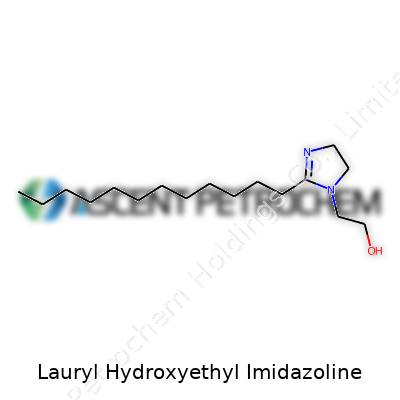
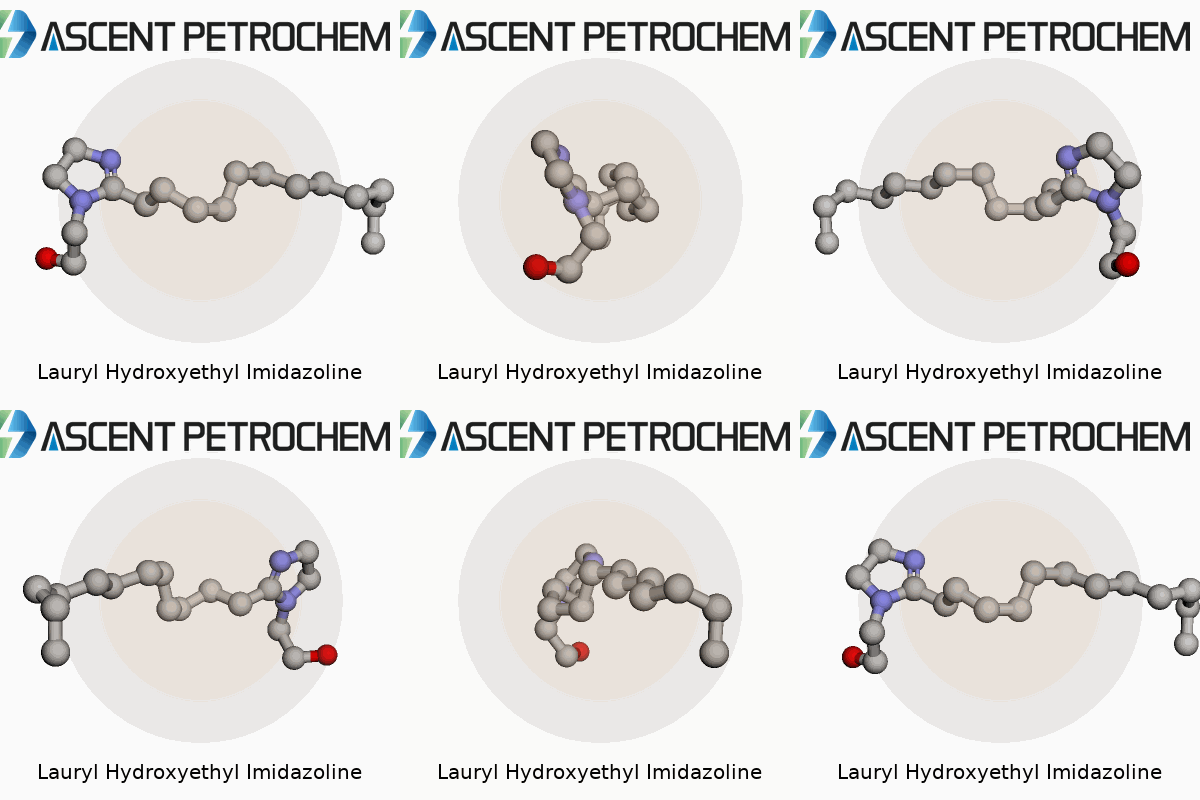
| Names | |
| Preferred IUPAC name | 1-(2-Hydroxyethyl)-2-lauryl-4,5-dihydro-1H-imidazole |
| Other names |
Lauryl hydroxyethyl imidazoline 2-(C12-14 Alkyl (even numbered) hydroxyethyl) imidazoline Lauryl ethyl imidazoline Lauryl hydroxyethylimidazoline 2-(2-Hydroxyethyl)lauryl imidazoline |
| Pronunciation | /ˈlɔːrɪl haɪˌdrɒksiˌɛθɪl ɪˌmɪdəˈzoʊliːn/ |
| Identifiers | |
| CAS Number | 13101-52-7 |
| Beilstein Reference | 1737066 |
| ChEBI | CHEBI:132584 |
| ChEMBL | CHEMBL279675 |
| ChemSpider | 56989074 |
| DrugBank | DB11268 |
| ECHA InfoCard | 03-2119981519-36-0000 |
| EC Number | 263-193-4 |
| Gmelin Reference | 1384167 |
| KEGG | C18606 |
| MeSH | D008099 |
| PubChem CID | 10461 |
| RTECS number | OL7060000 |
| UNII | 9E2363Y60B |
| UN number | UN3082 |
| CompTox Dashboard (EPA) | DTXSID5029156 |
| Properties | |
| Chemical formula | C17H35N2O |
| Molar mass | 344.6 g/mol |
| Appearance | Yellow to brown viscous liquid |
| Odor | slight characteristic |
| Density | 0.97 g/cm3 |
| Solubility in water | Soluble in water |
| log P | 2.9 |
| Vapor pressure | <0.1 mmHg (20°C) |
| Acidity (pKa) | pKa ≈ 8.9 |
| Basicity (pKb) | 5.75 |
| Magnetic susceptibility (χ) | -67.0e-6 cm³/mol |
| Refractive index (nD) | 1.4690 |
| Viscosity | 1500-2500 cps |
| Dipole moment | 4.68 D |
| Thermochemistry | |
| Std molar entropy (S⦵298) | 754.6 J·mol⁻¹·K⁻¹ |
| Std enthalpy of formation (ΔfH⦵298) | -814.7 kJ/mol |
| Std enthalpy of combustion (ΔcH⦵298) | -8028 kJ/mol |
| Pharmacology | |
| ATC code | D08AJ21 |
| Hazards | |
| Main hazards | Causes serious eye irritation. Causes skin irritation. Harmful if swallowed. Harmful to aquatic life with long lasting effects. |
| GHS labelling | GHS07, GHS05 |
| Pictograms | GHS05,GHS07 |
| Signal word | Warning |
| Hazard statements | H318: Causes serious eye damage. |
| Precautionary statements | Precautionary statements: P264, P280, P302+P352, P305+P351+P338, P332+P313, P337+P313 |
| Flash point | > 127°C (open cup) |
| Lethal dose or concentration | LD₅₀ (oral, rat): 2200 mg/kg |
| LD50 (median dose) | LD50 (oral, rat): 2200 mg/kg |
| NIOSH | WJ8921750 |
| PEL (Permissible) | PEL (Permissible) for Lauryl Hydroxyethyl Imidazoline: Not established |
| REL (Recommended) | 15 mg/m3 |
| Related compounds | |
| Related compounds |
Cocoyl Hydroxyethyl Imidazoline Oleyl Hydroxyethyl Imidazoline Stearyl Hydroxyethyl Imidazoline Myristyl Hydroxyethyl Imidazoline |




